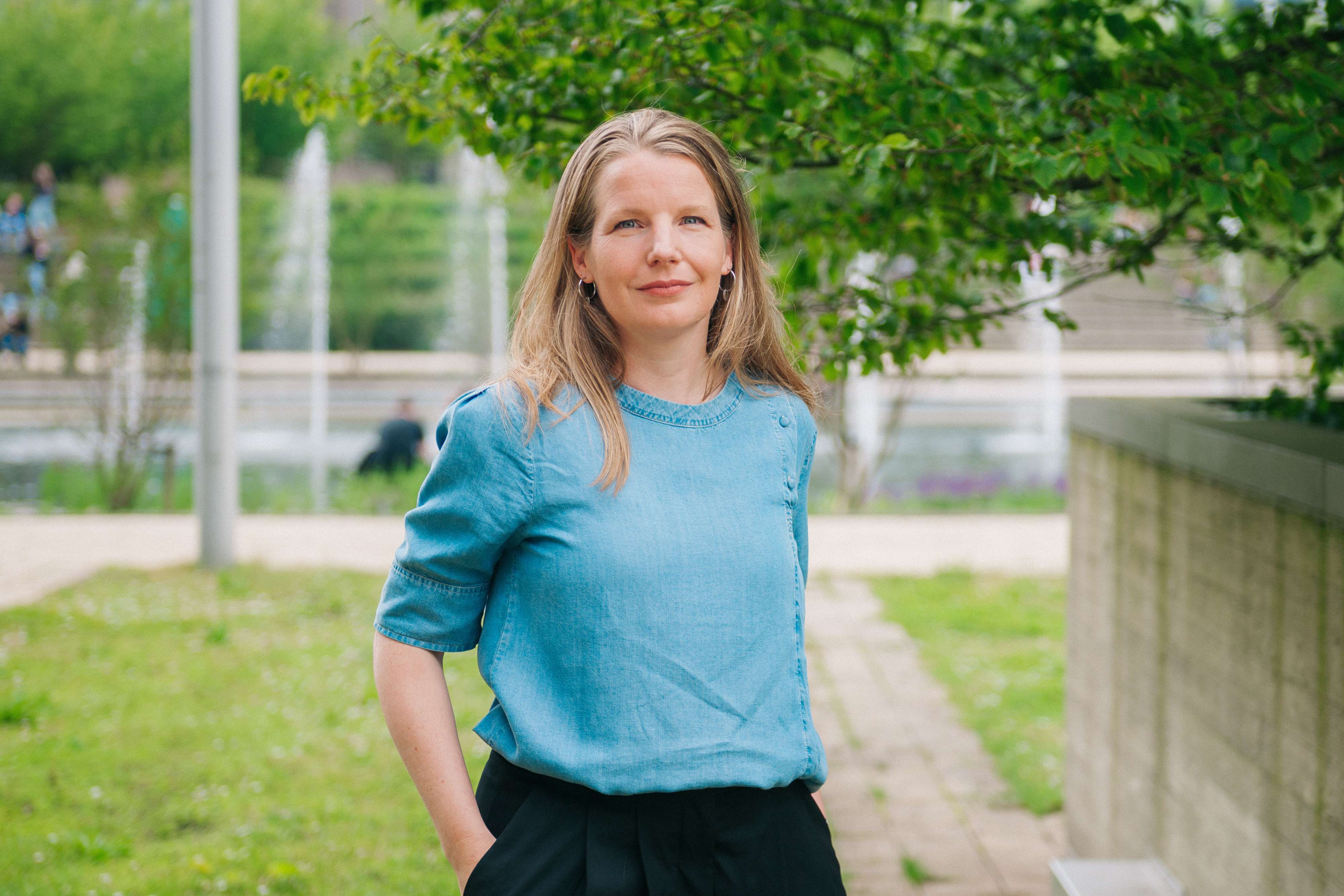
Circle Economy announces a leadership change. Hilde van Duijn, currently Managing Director, will assume the role of Chief Executive Officer (CEO), succeeding Ivonne Bojoh. Ivonne has served as CEO since 2023, following her earlier roles as Director of Digital and Chief Operating Officer.
Hilde van Duijn joined Circle Economy in 2018. Since then, Hilde has led multiple projects focused on the valorisation of post-consumer textiles. From 2018 to 2020, Hilde managed the Interreg NWE Fibersort project, leading a consortium spanning multiple steps of the end-of-use value chain for textiles. As project lead for Sorting for Circularity Europe, she worked closely with Fashion for Good to map the recyclability of post-consumer textiles in six European countries. She also drove Circle Economy's work in the EU-funded Switch to Circular Economy Value Chains project, which aims to build circular economy capacity in producing countries within global value chains.
In 2024, Hilde was promoted to Managing Director of Circle Economy Foundation, spearheading our collaborations with governments and institutions to accelerate the circular transition.
Before joining Circle Economy, Hilde led impact initiatives in the textiles and cotton sectors, advised governments and international organisations, and forged cross-industry partnerships worldwide.
“I’m honoured to step into the role of CEO at Circle Economy”, says Hilde van Duijn, “What makes Circle Economy special is its people and its partners. Since I joined in 2018, their passion and commitment have never ceased to inspire me. I look forward to building on the strong foundation Ivonne has laid and working with our partners to accelerate the transition to a truly circular and just economy.”
“I joined Circle Economy to help scale its impact, and that ambition has guided my work throughout my time here, including as CEO,” says Ivonne Bojoh. “I’m proud of what we have built together with an extraordinary team and a global network of partners. This transition marks a natural next chapter for the organisation, and I am handing over to Hilde van Duijn, with appreciation for the leadership she brings to the organisation.”
“I have full confidence in Hilde’s leadership as she takes on the role of CEO. Over more than eight years at Circle Economy, she has led complex and ambitious projects at the heart of the circular transition. Her blend of leadership experience and technical expertise makes her exceptionally well-suited to guide the organisation forward. I am extremely grateful for Ivonne’s contribution to Circle Economy’s impact, and I am happy that she will still assist the organisation in exploring new strategic alliances using her international network, experience and strategic thinking”, says Robert-Jan van Ogtrop, Founder and Board Chairman of Circle Economy.

.png)
- The transition to a circular model in the hotel industry requires strong cross-sector and public–private collaboration, along with the development of systemic conditions to scale effectively.
- The new white paper identifies five areas of action to advance circularity: procurement, operations, the built environment, corporate culture, and circular destinations.
Madrid, 19 January 2025. Iberostar Hotels & Resorts, Circle Economy and UN Tourism today present the report ‘Towards circular hospitality: Transforming the tourism system’. This document examines the challenges facing the hotel industry in the face of growing resource scarcity. Aimed at fostering collective conversation with key actors in each destination, this report highlights circular economy opportunities and strategies that enable competitiveness, improved efficiency and more responsible operations in the mid- to long-term.
It is estimated that tourist accommodation is responsible for 260 million tonnes of CO2 emissions per year1, a figure almost as high as the annual emissions of the whole of France. With around 70% of these emissions2 coming from the production, transport and disposal of the goods and services on which hotels depend, and which guests consume, purchasing and operational decisions can transform entire supply chains. Different circular economy strategies — such as reverse logistics or prioritising repair and reuse over disposal — are crucial to reducing the sector's impact.
Challenges for the hotel industry
Hotels face multiple individual and systemic barriers. The report identifies ten key challenges, including: the lack of adequate recycling infrastructure in many tourist destinations, which means that waste separation in hotels does not reach its full potential; behavioural barriers, such as cultural change in behaviour in relation to climate change; the absence of a shared vision of circularity in the hospitality industry, which makes it difficult for sustainable solutions to scale beyond individual hotels or chains.
Success story: Iberostar Hotels and Resorts
In a context of systemic challenges, individual initiatives can help demonstrate what is possible and offer practical benchmarks for other actors in the value chain. The report draws on the experience of Iberostar, a hotel group with more than 100 hotels in 14 countries, to illustrate how some of these challenges are being addressed in day-to-day operations.
Iberostar's approach to circularity combines people, data and innovation. Driven by purpose and with commitment from leadership, the company has created teams dedicated to the 3Rs, with more than 250 professionals focused on waste separation, measurement and analysis. At the same time, it uses artificial intelligence tools in the kitchens of more than 60 hotels to monitor and reduce food waste, helping to better understand where losses occur and how they can be avoided.
In addition, efforts are being made to integrate circularity into purchasing decisions, hotel design, and the guest and employee experience, as well as daily operations. Together, these measures have contributed to a reduction of more than 80% in waste sent to landfill since 2021.
However, their experience also shows that progress requires support of actors, local infrastructure, policies and partnerships and that systemic circularity cannot be achieved through the individual actions of stakeholders across the value chain.
Five strategic opportunities for change
Built from insights and sectoral workshops, the white paper identifies five strategic areas for moving towards a circular economy:
- Circular procurement: Engage suppliers to prioritise durable, reusable or biodegradable options, avoiding unnecessary materials.
- Circular operations: Involve staff in the responsible use of resources such as water, and optimize menus.
- Circular built environment: Design energy-efficient, durable and easy-to-dismantle buildings using bio-based materials and with renewable energy.
- Circular business culture and experiences: Train managers and employees in circularity principles and raise awareness among guests to encourage responsible behaviour.
- Circular destinations: Collaborate with local authorities, invest in nature restoration and support local circular initiatives.
Gloria Fluxà Thienemann, Vice-Chairman & Chief Sustainability Officer at Grupo Iberostar, explains: Four years ago we embarked on an ambitious journey to reduce the waste we send to landfill and bring circularity into our operations. Not as a standalone project, but as a fundamental shift in how we run our business. It meant aligning internal strategic priorities, business objectives and incentives - we believe this is how systems change begins — not with one big decision, but with thousands of small choices aligned in the same direction. The transition to a circular hotel industry will require going beyond individual efforts and committing to collaborative actions in different areas to implement systemic change. Only in this way can we scale positive impact while strengthening the competitiveness and future of our sector.
H.E. Ms Shaikha N. Alnuwais,Secretary - General at UN Tourism outlines: The hospitality industry plays a central role within the tourism value chain and influences how destinations manage resources, reduce waste, measure impact, strengthen local economies and respond to growing climate, environmental and supply-chain pressures. Advancing circular and regenerative practices is not only an environmental priority, but a strategic pathway to resilience, climate action, competitiveness and long-term value creation. We hope that the white paper will inspire change, and provide useful guidance for policymakers, businesses and destination stakeholders seeking to advance a more circular and resilient tourism future.
Claudia Alessio, circularity expert and author for Circular Economy, adds: The circular economy is not just an environmental necessity, it is a means to an end. It strengthens business resilience by recognising that hospitality depends on healthy natural and social capital. It is a powerful tool for climate change mitigation and adaptation, and promotes the well-being of destinations by helping them operate within their carrying capacity. The framework we present is designed for use by the entire value chain, providing the sector with a common direction to move forward together.
Since its launch in May 2024, the SOLSTICE project is accelerating the transition from linear models to circular regional ecosystems in the textile industry, focusing on four territories: Grenoble-Alpes Métropole (France), Berlin (Germany), Prato (Italy), and Catalonia (Spain).
By mid-project, SOLSTICE has already revealed both regional disparities and promising solutions to strengthen textile repair, reuse, and recycling infrastructure.
Mapping the Circular Textile Landscape in Europe
SOLSTICE began with an in-depth territorial analysis led by Circle Economy, examining how local textile systems operate across the four regions. The findings revealed significant geographic imbalances: circular services such as repair, reuse, and recycling remain largely concentrated in urban centres, leaving suburban and rural areas underserved.
The analysis also confirmed that a uniform approach to circularity is ineffective. Each territory operates within a distinct economic and infrastructural context. While Berlin and Grenoble are primarily consumption hubs focused on creative repair, Prato is defined by its industrial recycling capacity. Meanwhile, Catalonia collects high volumes of textile waste but still relies heavily on landfills due to a lack of reuse infrastructure.
These insights underscore the need for region-specific strategies to effectively scale circular textile solutions across Europe.
Engaging Citizens in Circular Textile Practices
Building on the territorial analysis, particularly regarding infrastructure access and public habits, SOLSTICE launched targeted pilots designed to actively involve citizens in the circular economy.
In Berlin, the project via Circular Berlin introduced the REPAIR DEAL, a pilot that encourages citizens to repair denim rather than discard it by combining a digital bonus
system with local repair services.
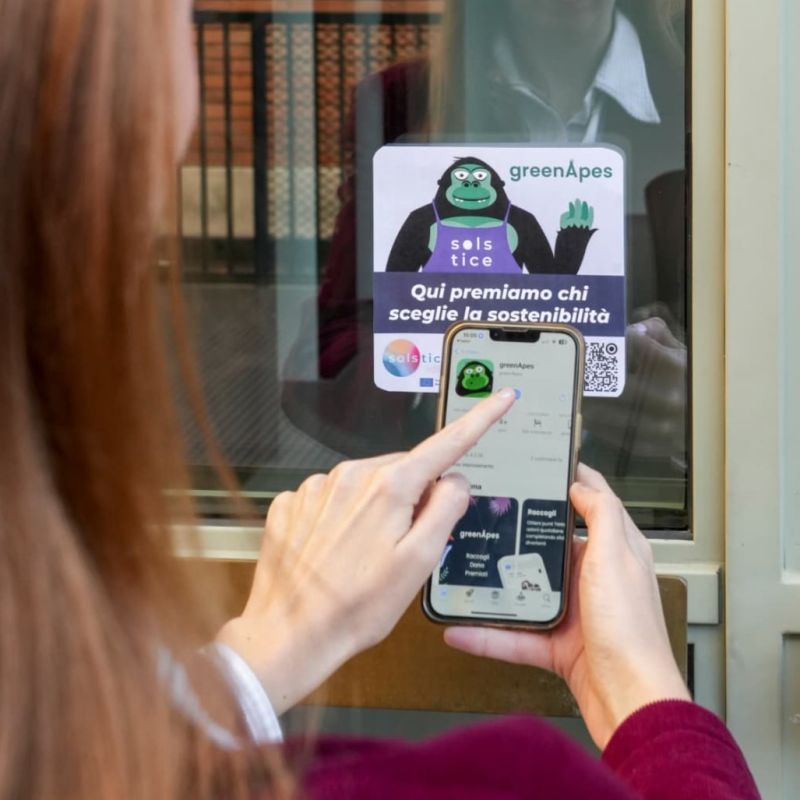
Meanwhile, in Prato, the Municipality of Prato addressed engagement through a gamified app called greenApes. Co-designed with citizens, the app maps local reuse services and rewards sustainable behaviours, allowing users to convert points into discounts or donations to social projects.
These pilots demonstrate how behavioural change, supported by digital tools and local services, can significantly increase participation in circular textile practices.
Advancing Industrial Recovery Pathways
Alongside these citizen-focused initiatives, SOLSTICE partners achieved significant technical advancements adressing the most complex challenges of sorting and recycling identified during the ecosystem mapping phase.
Automated sorting: Pellenc ST successfully tested automated sorting lines on post-consumer textiles, producing high-quality feedstock for chemical recyclers with PET purity reaching greater than 96%.
Elastane removal: Addressing complex blends, Next Technology Tecnotessile developed a thermo-chemical process that selectively removes elastane from mixed fabrics, enabling the recovery of polyester and polyamide for reuse.
Decision support: To optimise these processes, Techtera launched Valoramix, a tool that uses economic simulation to help professionals visualise flows and identify the most viable valorisation pathways.
By starting with a clear look at how different regions operate, SOLSTICE connects local citizen action with large-scale industrial solutions. The project proves that moving to a circular textile industry isn't just about one fix, it requires better data, consumer support, and advanced recycling technology working together.
Additional details and visual documentation of the project’s activities and pilot actions are available in the accompanying PDF, which includes photographs from across the four pilot territories.
Between 121 and 142 million people worldwide are employed in sectors that contribute to the circular economy, such as repair, recycling, second-hand trade and waste management. This represents roughly between 5 and 5.8 percent of total global employment (excluding agriculture), according to a new joint report by Circle Economy, the International Labour Organization (ILO) and the World Bank Group, in partnership with the UN Partnership for Action on Green Economy (UN-PAGE).
The study—the first global analysis of employment in the circular economy— shows that most circular economy activities are concentrated in the Global South. The Americas and Asia and the Pacific regions report the highest shares of circular employment, at 6.4 percent and 5.8 percent respectively.
More than half of all circular economy workers—over 74 million people—are employed in the informal economy, where jobs are not regulated and lack state protection. This is particularly prevalent in the Global South, leaving many of the workers driving sustainable development and caring for our planet among the most disadvantaged. They often face precarious working conditions, unstable incomes, and low wages.
Titled Employment in the Circular Economy: Leveraging circularity to create decent work, the study is the culmination of three years of collaboration between the three agencies aimed at equipping policymakers and decision-makers with data and practical tools to accelerate a just and job-rich transition to the circular economy.
‘With this report, we are casting a new light on the businesses and workers that every day in every country and every sector of our economies provide essential services for our societies and planet’, said Casper Edmonds, Head of the Extractives, Energy & Manufacturing Unit at the ILO. ‘Some are at the forefront of innovation. But for many, circularity is not a choice, but a way of getting by. If we combine investments in circularity with measures to advance decent work, we accelerate a just and job-rich transition to the circular economy’.
A selection of sectors dominate circular economy employment. Repair and maintenance account for nearly half (46 percent), followed by manufacturing (24.5 percent) and waste management (8 percent). By contrast, industries that are crucial to advancing the circular transition—such as construction and mining—have a very low share of circular employment. The report stresses the need for targeted policies to ‘green’ jobs in these sectors and accelerate their transition toward a circular economy.
The findings call on policymakers to integrate workers’ rights and social protections into circular economy strategies. Too often, environmental legislation prioritises climate goals while neglecting the social dimension and the people driving the transition.
‘Jobs in the circular economy are highly labour-intensive and present a real opportunity to create local employment, particularly in developing countries where such practices are already part of daily life,’ said Namita Datta, Head of Gender & Economic Inclusion Thought Leadership at the International Finance Corporation. ‘The key question is how to make these opportunities inclusive—ensuring that women, who make up 26% of circular economy workers, benefit fully. With intentional investments and policies, we can create not just green jobs, but better-quality green jobs linked to productive value chains for women and informal workers.’
To ensure a just transition to the circular economy, the report recommends:
- Promoting circularity through public procurement and investment in high-potential sectors like manufacturing and construction;
- Supporting sustainable enterprises through access to finance, business development services and capacity-building programs;
- Developing inclusive educational programmes with a focus on youth, informal workers and women;
- Enforcing occupational safety and health standards, extending social protection to informal workers and upholding fundamental labour rights;
- Strengthening data ecosystems at local, national, and international levels to monitor and assess circular economy activities and related employment trends.
‘This report is the first global analysis of employment in the circular economy,’ said Esther Goodwin Brown, Circular Jobs Initiative Lead at Circle Economy. ‘However, this study is just the first step. It demonstrates that there are significant data gaps we must overcome—particularly to better recognise and value the contribution of workers in the informal economy and agricultural sector. We look forward to continuing our work with partners to bridge these gaps and develop modelling that can better inform the design of circular economy and socio-economic policies.’
The report draws on the expertise of an international advisory board and benefits from close collaboration with the UN Partnership for Action on Green Economy (PAGE), an interagency programme that brings together the expertise of five UN agencies: ILO, UNEP, UNDP, UNIDO and UNITAR.
- Sweden is losing SEK 600 billion (€54.6 billion) each year due to linear economy practices, or 19% of the total economic value created in the country.
- The majority of goods reaching their end of life are not reused, refurbished, or recycled—a main channel through which value leaks away.
- Transitioning to a circular economy could enable Sweden to capture the unrealised value.
24 November, AMSTERDAM — A first-of-its-kind study finds that Sweden is losing SEK 600 billion (€54.6 billion) each year due to linear economy practices, such as designing products for short lifespans and failing to reuse or recycle them. This loss represents 19% of the total economic value created in the country and is equivalent to 57% of the national state budget.
The Circularity Gap Report (CGR®) The Value Gap: Sweden, authored by Circle Economy in partnership with RISE, initiated and funded by RE:Source, provides clear evidence of the economic inefficiencies inherent in a linear economy, reinforcing the economic case for the circular transition. With this study, Sweden becomes the first country in the world to quantify how much economic value it loses due to linear practices.
‘Historically, we have measured prosperity by the value we create. Few have lookedat the value we are losing. Our economy is leaking, and the Value Gap shows uswhere those leaks are and how much they cost’, says Ann-Charlotte Mellquist, project manager and researcher at RISE.
Products discarded too soon are Sweden’s largest source of lost value, costing the country SEK 420 billion (€38.3 billion) annually. Extending product lifespans through reuse, refurbishment and remanufacturing could recover much of this loss.
‘The majority of goods reaching their end of life are not reused, refurbished, or recycled. By failing to give products and materials long lifespans, we waste not only the materials themselves but also the energy, labour, and infrastructure invested in them – the very value we work so hard to create,’ says Klas Cullbrand, Innovation Leader at RE:Source.
In addition, overconsumption—spending that exceeds actual needs or offers minimal benefit—amounts to SEK 200 billion (€18.2 billion) annually. This is roughly four times the amount Sweden planned to allocate for development aid to the world’s poorest countries in 2025 (SEK 56 billion).
When comparing economic sectors, construction stands out as the largest source of value loss, amounting to 180 billion SEK (€16.4 billion). The majority of this loss occurs when buildings are demolished and their embedded value is discarded. The second-largest source of value loss is consumer goods like textiles, electronics, plastic packaging and furniture. Each year, an estimated SEK 88 billion (€8 billion) worth of these goods becomes waste, while they could have remained in circulation within a more circular economy.
The report recommends the following actions to reduce value loss and better capture circular opportunities in Sweden:
- Introducing policies that recognise environmental and social value, such as repair subsidies, tax incentives for reuse, and circular procurement rules.
- Incentivising circular business models like product-as-a-service, reuse platforms, and industrial symbiosis (when by-products or waste of one industry are used by another industry).
- Promoting conscious consumption by embedding circularity into education, culture, and regulation.
‘While this report examines the Swedish economy, its findings are relevant beyond the country’s borders. It demonstrates that the linear, ‘take-make-waste’ models are not only environmentally harmful, but also economically weak. This presents a strong business case for the circular economy, which can unlock billions in untapped value—in Sweden and globally’, says Ivonne Bojoh, CEO at Circle Economy.
.png)
Over the past four years, Québec’s economy has become less circular, according to the updated Circularity Gap Report (CGR®) Québec released today. In 2021, 3.5% of materials used in the provincial economy came from recycled sources. By 2025, this figure is 2.5%. This trend underscores the need for urgent action.
The new report, produced by the impact organisation Circle Economy in collaboration with RECYC-QUÉBEC, examines the state of the circular economy in Québec four years after the first Circularity Gap Report Québec (2021). While the initial report prompted provincial authorities to adopt the Circular Economy Roadmap 2024–2028, the new policies have yet to improve Québec’s circularity rate.
The decline in circularity is largely attributed to persistent overconsumption. Québec residents consume an average of 46 tonnes of materials per person per year—nearly four times the global average. This leads to a rising amount of waste, which overwhelms the province’s recycling systems, pushing its circularity rate down.
The report also highlights a decline in Québec’s material productivity. In 2019, the province generated 16% less economic value in CA$ per tonne of materials than in 2016, indicating a less efficient economy.
Material overconsumption hampers Québec’s climate goals. While over 99% of its electricity comes from renewable sources, emissions embedded in imported goods remain high. Québec’s consumption-based carbon footprint stands at 14 tonnes per capita—double the global average of seven tonnes. More than half of these emissions are tied to goods and services produced abroad.
The report commends Québec’s authorities for recent policy efforts to improve circularity. In particular, the Circular Economy Roadmap 2024–2028 outlines concrete actions to close material loops and commits to using Circle Economy’s Circularity Metric for monitoring progress, enabling data-driven decisions and accountability.
However, the CGR Québec 2025 stresses that further policy action is needed for meaningful progress. It recommends setting clear, sector-specific targets for reducing the province’s material footprint. These targets should be supported by robust monitoring and collaboration across sectors.
Policies should also make it easier for businesses to adopt circular practices. Suggested measures include making recycled materials cheaper and subsidising circular business models, such as repair and rental services. Lastly, policies could prioritise reuse, refurbishment, and extending the lifetime of existing materials and products. This would allow the province to retain value within its borders and reduce dependence on volatile global supply chains.
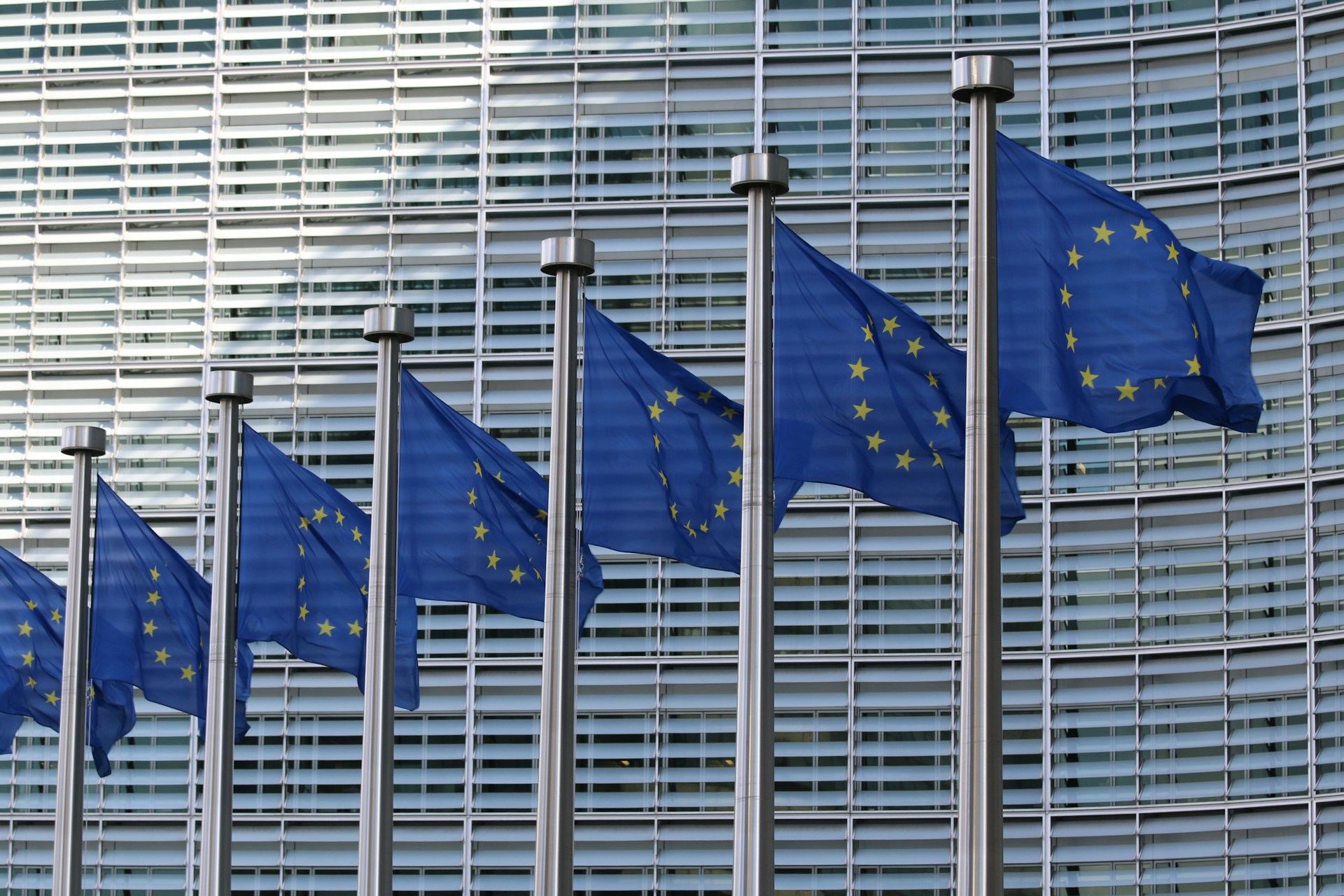
Circle Economy is proud to have taken part in the public consultations for the upcoming EU Circular Economy Act. As the consultations concluded on November 6, we look forward to seeing the Act take its final shape next year. Our official response is presented below.
Closing the gap: How the EU can lead a fair and global circular transition
We at Circle Economy, an impact organisation based in the Netherlands, welcome the Circular Economy Act and the global leadership the European Union is taking in driving circular economy policies. As highlighted in our Circularity Gap Report 2025, the circularity gap continues to widen. The use of secondary materials is declining—from 9.1% in 2018 to 6.9% in 2025—while overall material consumption keeps rising.
The circular economy offers a practical approach to achieve climate stability, resource security, and fair global value chains. But a successful circular transition must work across borders, support workers and communities, and reduce the environmental and socioeconomic pressures created by today’s linear systems.
Our response to the public consultation for the upcoming Circular Economy Act builds on our main areas of expertise: understanding circularity from a systemic perspective and providing clear data to measure progress. We examine value chains as part of the global economy, rather than in isolation, and assess both environmental and socio-economic impacts holistically. We recognise the importance of adopting a territorial approach to circularity, acknowledging the crucial role that cities and regions play in planning and embedding the circular economy within our societies and economies. A key part of our work is focused on fixing the economic and financial inadequacies of our linear system, enabling circular business models to compete fairly and scale effectively.
In addition to our response to the public consultation, we highlight below several key messages derived from 15 years of experience researching and implementing circular transitions:
- The Circular Economy Act must address ever-growing material overconsumption and overproduction, which is currently lacking from the scope of the Act. Focusing primarily on recycling will not close the loop: priority must be given to lowering the material footprint of key sectors, including construction, agri-food, consumer goods, and mobility.
- It is welcome that the consultation places such a strong emphasis on economic and financial incentives. Virgin materials are still too cheap, and circular business models struggle to compete. Prices need to reflect real environmental and social costs to direct investment towards durable, repairable, and waste-preventing products and services. This falls within the scope of the Act, which proposes landfill taxes, clear recycling targets, and a revised Extended Producer Responsibility framework.
- The consultation rightly highlights the importance of skills and reskilling. A circular economy cannot work without a well-trained and capable workforce. To ensure a fair transition, targeted training and support must be provided to workers, guided by strategic roadmaps steering sectors towards a circular future. The EU can support Member States with this through roadmaps, facilitating the exchange of best practices and sharing insights from existing educational and training institutions.
- The European Union is an ideal place to build communities of practice and share what works among countries. Beyond businesses and central governments, cities are best placed to serve as testing grounds for circular solutions. With growing urbanisation, their close connection to citizens, and the right scale for action, cities must be recognised as essential partners in the circular economy transition.
- Finally, Europe cannot deliver circularity in isolation. Supply, production and end-of-life management largely take place outside the EU, making fair cooperation essential. Circular policies must avoid shifting environmental or social impacts to trading partners. A truly circular Europe must be built with global trade partners, not at their expense, through political support and collaboration, technology transfer, financial and development assistance, and investment.
The Circular Economy Act has the potential to be a milestone for circular economy implementation in the EU. In a time of political uncertainty, the Act can offer a clear direction towards ambitious policies that make sense for people, the environment and businesses. To succeed, the Circular Economy Act must go beyond recycling to reduce the material footprints of key sectors, supported by economic incentives that reflect true environmental and social costs. A well-trained and supported workforce, active city involvement, and strong global cooperation are essential to ensure an inclusive, effective, and truly circular transition across the European Union.
- At 1.3%, the share of recycled or reused materials in Brazil’s economy is significantly lower than the global average of 6.9%.
- The metric is low due to a low recycling rate and a high material footprint, which presents an opportunity to improve both aspects.
- In particular, sustainable management of biomass processes and industries in Brazil has the potential to improve both circularity and sustainability.
Only 1.3% of materials used in Brazil’s economy come from recycled or reused sources, placing the country well below the global average of 6.9%, according to the Circularity Gap Report Brazil. The report, developed by Circle Economy in collaboration with Deloitte Brazil, quantifies for the first time the nation’s level of circularity. The study finds that Brazil’s economy remains largely linear and extractive, with high material consumption driven by agriculture, manufacturing, housing, and infrastructure.
As Latin America’s leading economy by GDP and a major global supplier of natural resources, Brazil consumes 4.1 billion tonnes of virgin materials each year—equivalent to 20 tonnes per person--this is known as the material footprint. This is higher than the global average of 13 tonnes and the estimated sustainable threshold of 8 tonnes per person. The country’s material footprint is dominated by locally sourced biomass—organic matter used as fuel—which accounts for 64% of total use, reflecting Brazil’s land-intensive economy.
In total, Brazil extracts around 5 billion tonnes of raw materials annually (25 tonnes per capita), making it Latin America’s second-largest extractor. While 31% of these resources are exported, 69% are used domestically, meaning much of the environmental impact—particularly from agriculture—occurs within Brazil’s borders.
Nevertheless, there are promising examples of excellence that demonstrate the transformative potential of circularity, such as the high recycling rate of aluminium cans, which reaches 97%. The cardboard recycling rate is also high (67%). With 39.5% of its materials coming from carbon-neutral biomass—well above the global average of 21%—Brazil stands out as a country where biomass can serve as a foundation for a more circular economy.
According to the report, Brazil’s carbon footprint, which measures the total greenhouse gas emissions caused directly or indirectly by the country’s consumption, totals 1.4 billion tonnes of CO₂ equivalent, or 6.5 tonnes per person—slightly above the global average. The largest contributors are the population’s needs for nutrition (565 million tonnes), services (216 million tonnes), manufactured goods (153 million tonnes) and housing and infrastructure (143 million tonnes). Since 87% of these emissions occur within the country, Brazil holds significant potential to reduce them through domestic policies and interventions.
“Right now, only 1.3% of materials in Brazil come from recycled sources, which shows the country still relies heavily on virgin resources. But it also points to opportunities. By scaling up things like regenerative agriculture and extending the lifespan of existing infrastructure, Brazil can unlock real economic, social, and environmental benefits. The key is coordination across stakeholders so Brazil can turn this potential into a fair and sustainable transition,” says Andrew Keys, Senior Research Analyst at Circle Economy.
The circular economy offers Brazil a strategic opportunity to reduce dependence on virgin materials, strengthen domestic supply chains, and improve economic and environmental resilience. In 2024, the Brazil government took an ambitious step forward in the transition by launching its first National Circular Economy Strategy, which aims to tighten regulations, lower resource intensity, stimulate innovation and investment, and align policies across sectors. Existing policies—such as Brazil’s Nationally Determined Contribution under the Paris Agreement, the National Ecological Transformation Plan, and the National Solid Waste Policy—also provide a foundation for circular progress.
“Deloitte Brazil was pleased to collaborate on this report which offers Brazilian leaders of organisations across sectors a useful framework to reimagine how we design products, use resources, develop cities, and educate society on many levels. It is important to create favourable environments for circular solutions to flourish, from effective public policies to financing, technological innovation, and professional training,” says Maria Emília Peres, sustainability strategy partner at Deloitte Brazil.
The report recommends coordinated action across government, industry and education to accelerate the transition. Priority areas include strengthening skills and training, improving waste management infrastructure, and supporting industrial symbiosis to reduce waste in manufacturing and agriculture. Developing a more regenerative circular bioeconomy could also help Brazil make more sustainable use of its rich biomass resources.
The full report is available at: https://dashboard.circularity-gap.world/report/brazil/overview
