.svg)

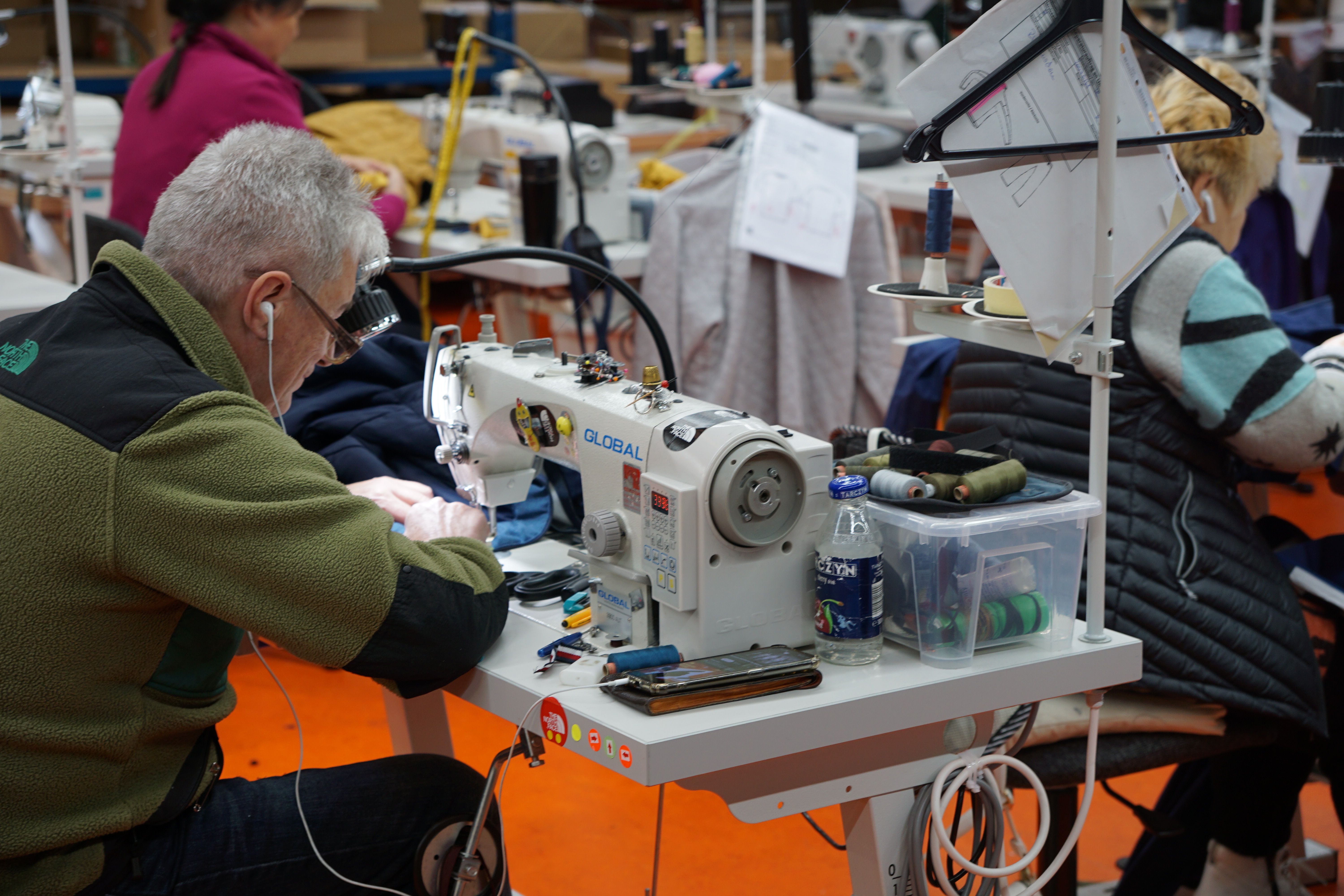
In an inconspicuous warehouse on the outskirts of Amsterdam, both people and clothing are given a fresh start. Employing more than 75 people with difficulties accessing the labour market, United Repair Centre works with leading brands to repair damaged items, having fixed over 75,000 pieces of clothing to date. It’s hard to believe it all started with a PDF document—until you speak with the founder, Thami Schweichler.
United Repair Centre (URC) was founded just three years ago, but its repair facility feels much more established. Rows of sewing machines fill most of the space, while the remainder is packed with racks of clothing waiting for their turn. But despite this hands-on appearance, URC is a high-tech company. In a nearby office, a team works on a digital platform that connects consumers, brands, logistics, and repair operations, gathering valuable data on clothing items that brands are willing to pay to have repaired.
According to Thami Schweichler, the founder and CEO, the idea to establish United Repair Centre originated from Circle Economy’s 2021 report, Putting Circular Textiles to Work. It examined how various circular strategies would impact the job market and what skills would be required to support a circular fashion industry. ‘When I read the report, I realised that two-thirds of future textile jobs in the Netherlands could be created by the second-hand and repair economy. That was my a-ha moment’, says Schweichler.
The report provided the entrepreneur with a science-backed business case for establishing a clothing repair centre in the Netherlands. However, Schweichler was well aware of the shortage of skilled tailors, which could put his venture at risk. In Europe, the repair economy is largely informal, disorganised, and focused on B2C, while repair skills are quietly disappearing from the continent. His solution was to employ newcomers to the Netherlands, including refugees, who often face barriers to entering the labour market.
.jpg)
‘That’s when I realised how powerful it could be to connect social inclusion with circularity. I approached Patagonia, a partner from my previous enterprise, and proposed two things. First, to foster the demand for repairs by creating a blueprint for repair programmes—sharing know-how with other brands on logistics, finance, and operations, from A to Z. Second, if we were going to create jobs, we should create them for people who really need them’, Schweichler recalls.
The underlying principle of the new business model is that brands should bear the cost of repairs, not consumers. Offering free repairs to customers creates loyalty, brings them back to stores and helps brands meet sustainability goals. What’s more, pricey products are easier to sell if they come with a repair guarantee.
The scheme worked even better than Schweichler expected. Patagonia provided the initial repair volumes, enabling United Repair Centre to get operations underway, and also introduced the company to other brands. The first clients were impressed by the skill of the people behind the sewing machines—the repaired clothing often looked even better than new.
Just three years after its establishment in 2022, United Repair Centre has grown into a company with three hubs—Amsterdam, London, and soon Paris. It employs over 65 people from 22 countries, around 75% of whom have a distance to the labour market. The company also established an academy to address skill shortages. Through its free training, even people without prior tailoring experience can learn the basics of the craft and secure their first paid job at the centre.
Today, URC collaborates with over 30 global brands, including Patagonia, Levi’s, The North Face, Lululemon, and Decathlon. Its operations in the Netherlands and the UK are profitable, and the whole group is expected to become profitable soon. ‘Five years ago, brands asked, “Why would we ever do repairs?” Today, they’re knocking on our door asking how to start. Policy developments, such as Extended Producer Responsibility and the Right to Repair, are shifting the market dynamics. That’s why I believe the demand from brands will continue to increase’, says Schweichler.
The forecast presented initially in Circle Economy’s report has proven accurate. The business case for B2B clothing repair not only exists but is becoming increasingly compelling. URC’s next challenge is to convince not only sustainability leaders like Patagonia, but also mass-market brands, to invest in repair. So far, all signs suggest that luck is on their side.

-p-500.jpeg)


