.svg)


In Yokohama, Japan’s largest port city, the rhythms of everyday life echo centuries-old cultural practices like resourcefulness and moderation. Long before the circular economy was coined as a concept, Japan embraced principles of reuse, repair, and shared responsibility. ‘Japanese society has long embraced ethical values that emphasise respect for resources and the life cycle of objects—embodied in the concept of mottainai—as well as a worldview that prioritises harmony with nature’, says Ms Tomomi Yamashita, Director General of Yokohama City’s International Affairs Bureau.
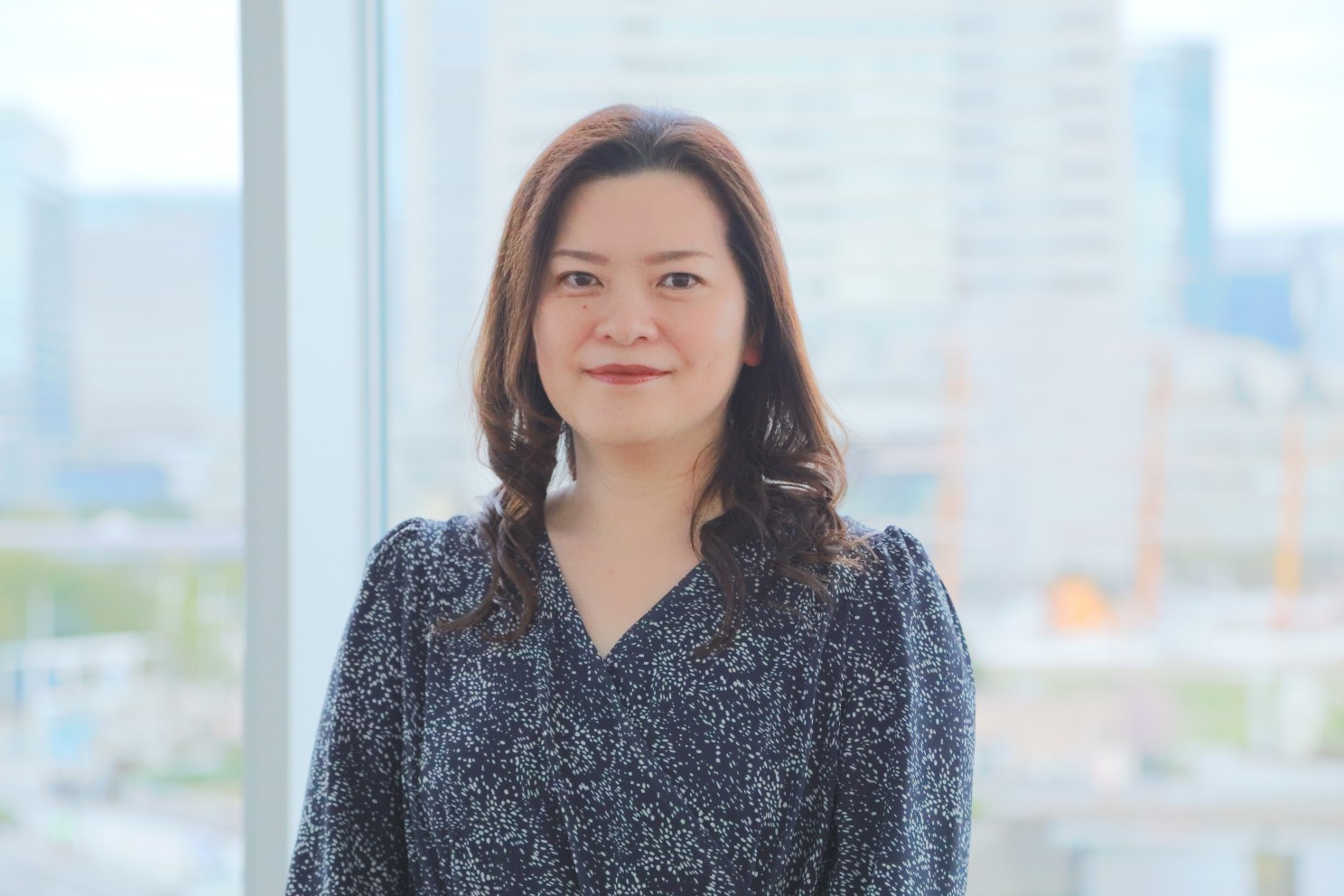
During the Edo period, cities in Japan already demonstrated circular thinking in practice. ‘Human waste generated in Edo (present-day Tokyo) was purchased by rural farmers and used as fertiliser, meaning the city functioned not only as a major consumption hub but also as a significant production source for agricultural inputs. The reuse of dismantled building materials and the collection of used paper were also commonplace. In commerce, the management philosophy of sanpo-yoshi—benefiting the seller, the buyer, and society—was widely embraced’. Yet, like many rapidly industrialising and expanding cities, Yokohama did not move through history in a straight line. Post-war growth, rising consumption, and globalised supply chains gradually distanced urban life from some of these earlier practices. Today, Yamashita suggests, the task is not to recreate the past, but to apply its underlying values to today’s urban reality.
From a small fishing village to a bustling industrial hub, Yokohama has repeatedly rebuilt itself in the aftermath of natural disasters, war, rapid population growth, and economic changes. The city’s latest evolution into a circular frontrunner has been successful because it combines policy innovation with citizen engagement and public-private collaboration: ‘Yokohama addressed these challenges through community meetings and sustained dialogue among the city government, citizens, and businesses, thereby advancing environmentally conscious urban development’, Yamashita explains.
The city’s vibrant array of circular initiatives illustrates this vision. In the Minato Mirai 21 (MM21) business district, the city collects and analyses data on resource flows, mapping how materials move through offices, commercial facilities, and public spaces. This data-driven approach identifies inefficiencies and opportunities to close resource flows, turning MM21 into a living laboratory for circular practices. These efforts are part of Yokohama’s flagship medium-term strategy, the Yokohama Circular Link, which brings together six key drivers to accelerate the city’s transition to circularity. The remaining drivers include the introduction of circular design principles in public buildings, supporting small and medium-sized enterprises in adopting circular business models, encouraging citizen participation in circular lifestyles, strengthening collaboration between manufacturers and recyclers, and expanding the composting and reuse of organic waste through urban farming initiatives.
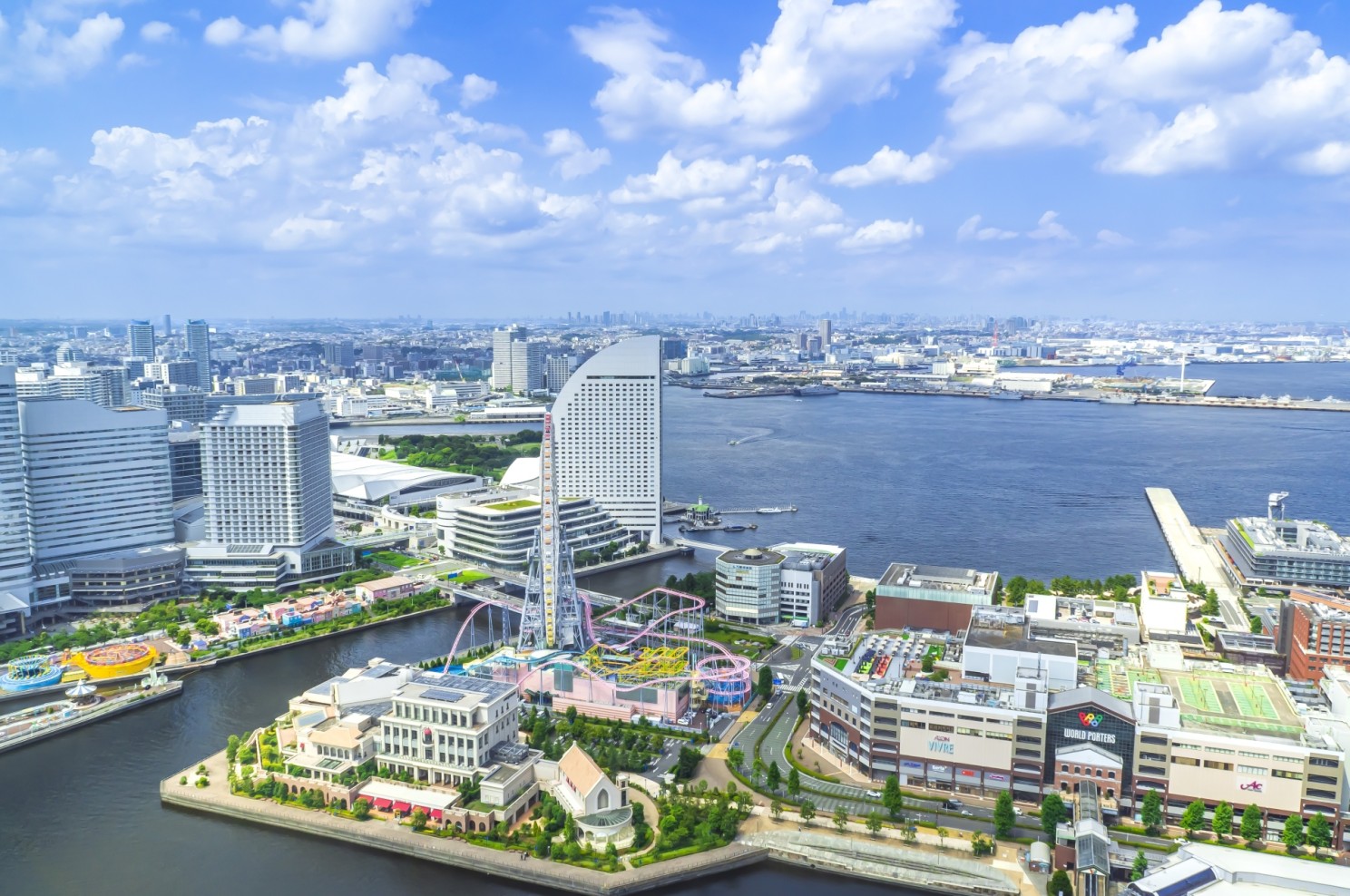
Yamashita notes that the city’s holistic approach is supported by a culture of civic cooperation and trust built over decades. ‘In Japan, municipalities hold responsibility for waste disposal and set their own separation rules. Yokohama decided to greatly expand these rules, reclassifying many items previously considered “burnable waste” as valuable “resources”—a shift in mindset. To address the increased burden on residents, the city partnered with local neighbourhood associations. Through these associations, the city conducted 15,000 resident workshops to explain the new system, transforming waste management from an “administrative issue” into a “community issue”’. By shifting priorities from incinerating all waste to reducing waste in the first place, the city saw a 43% reduction in waste between 2000 and 2010.
While Yokohama has paved a local path, the pressures it faces are far from unique. Across Asia, and increasingly around the world, cities are being reshaped by unprecedented urban expansion and rising consumption. At the same time, many urban centres, including those in more developed economies, are being confronted with ageing populations and the costs of maintaining infrastructure, all while public budgets are tightening.
‘Many rapidly growing Asian cities face environmental and infrastructure challenges associated with rapid urbanisation, such as severe traffic congestion, air pollution, deteriorating living conditions, and insufficient water and waste management systems…As these cities continue to develop, it is expected that they will eventually encounter challenges similar to those Yokohama faces today: population ageing, infrastructure renewal, and rising financial pressures’, Yamashita observes.
She sees the circular economy as a practical solution. ‘Promoting the circular economy directly contributes to mitigating environmental pollution and waste management shortages associated with rapid urbanisation’. This description could just as easily apply to cities far beyond Asia. Across Europe, cities are also grappling with ageing infrastructure and populations, housing shortages, dependence on imported and often scarce materials, and the need to decarbonise while remaining economically competitive. In today’s interconnected global economy, these challenges are unfolding in parallel—at different speeds and scales, perhaps, but shaped by many of the same underlying causes. This shared reality underscores why cross-regional collaboration is a must.
Recognising that these pressures extend well beyond Japan, Yokohama began to look outward. ‘As a city that has faced and overcome many urban challenges and cultivated strong partnerships with Asian cities and international organisations, Yokohama believes it has a unique role to play…In an increasingly globalised world, the circular economy requires cross-border collaboration, including at the city level. To accelerate the transition toward circular cities in Asia, Yokohama proposed establishing the Asian Circular Cities Declaration (ACCD) framework with Asian cities and international partners’.
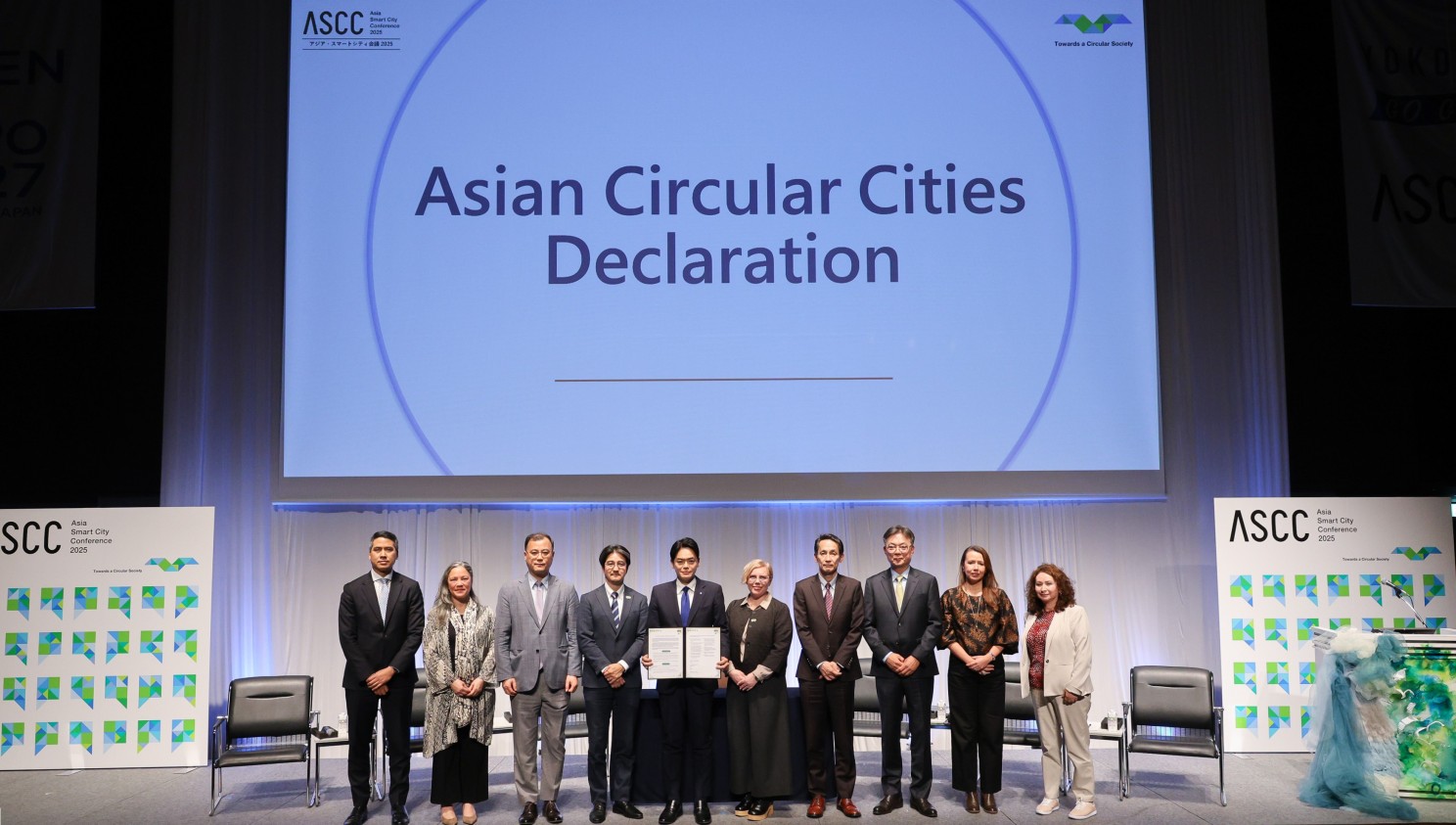
Support for the initiative quickly took on an international dimension. Working alongside ICLEI Japan, Circle Economy is serving as a knowledge partner to help ensure the declaration is grounded in concrete and measurable action. The approach draws on experience from Europe, where the European Circular Cities Declaration (also supported by Circle Economy) has already brought together more than 90 cities committed to advancing the circular transition. Rather than replicate that model wholesale, the ACCD adapts its spirit of collective commitment to the realities of Asian contexts. ‘During the conceptual stage, city staff engaged in extensive dialogue with European cities and organisations that are leading circular transitions. Discussions with Amsterdam, ICLEI Europe, Circle Economy, and other key actors strengthened Yokohama’s commitment and reinforced the shared sense of mission’, Yamashita says.
The ACCD was launched at the Asia Smart City Conference (ASCC) 2025, with Yokohama as the first signatory. Yamashita frames the ACCD as both a platform and a network. ‘The ACCD aims to be a practical platform where participating cities—with all their differences—can work together toward shared goals’. Signatory cities benefit from shared learning and coordinated action. ‘While a single city has limited power, the collective voice of Asian cities united under the ACCD can have a significant global impact’.
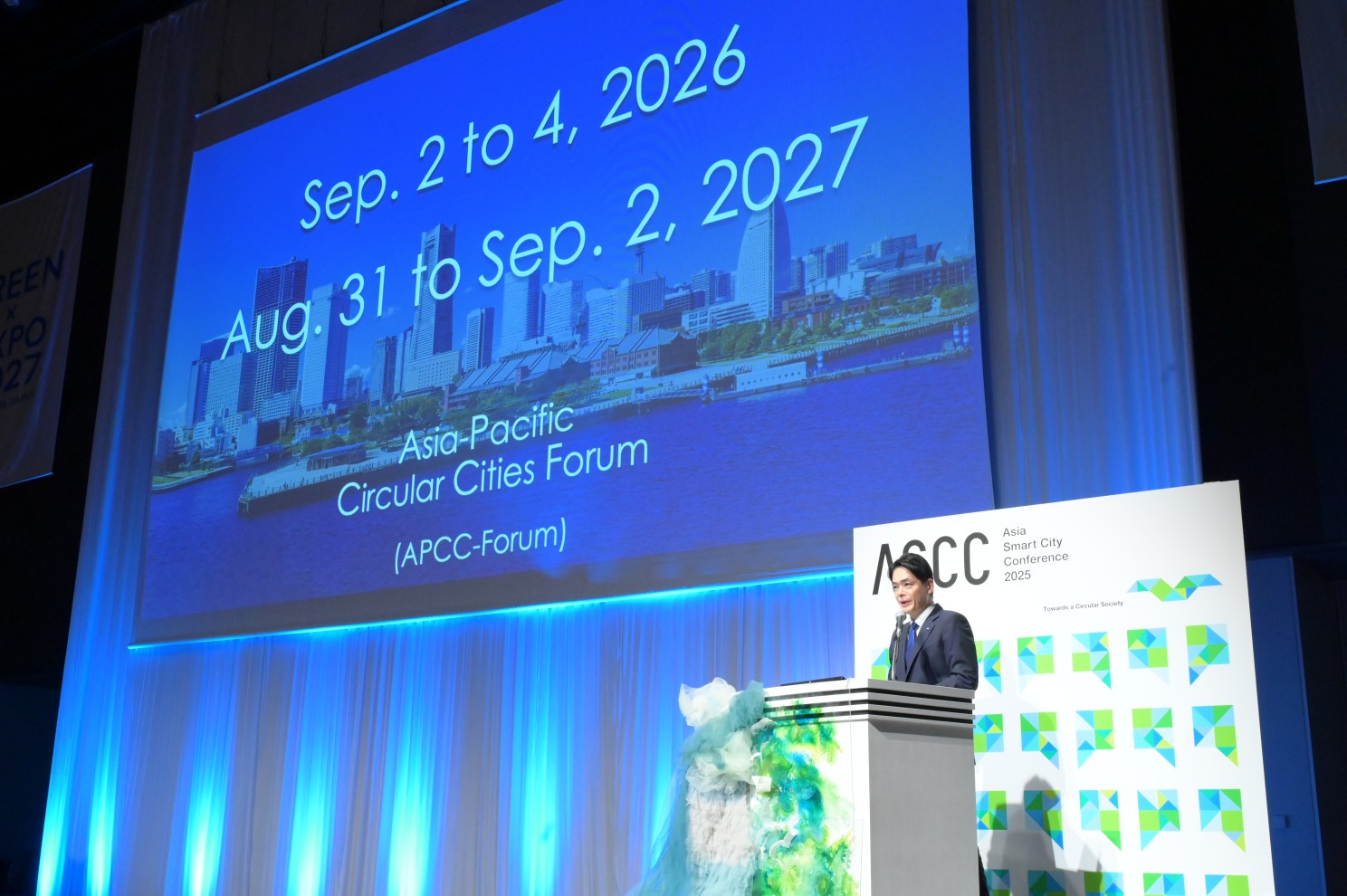
The ACCD will evolve through the Asia-Pacific Circular Cities Forum (APCC-Forum), a conference taking place in Yokohama in September 2026 that will serve as a knowledge-sharing opportunity for signatory cities. ‘This will be the first time ACCD cities meet in one place to discuss key actions going forward’, Yamashita notes. Her long-term vision is clear: translate local expertise into regional momentum across Asia. ‘Ultimately, Yokohama hopes the ACCD will help establish circular economy practices tailored to the Asian context, strengthen urban resilience, and foster a positive cycle between environmental and economic outcomes across the region’.
Yet those involved are keenly aware that declarations can falter if they remain only symbolic. The challenge now is implementation: pairing political momentum with clear metrics, practical tools, and accountability. Partners supporting the initiative, like Circle Economy, are working to ground the ACCD in evidence. Building capacity and creating mechanisms for cities to track progress over time. When realised, the declaration could become more than a regional pledge. It may signal the emergence of a more connected global framework for circular cities, one that enables European and Asian municipalities to learn from and grow with each other.
Learn more about the ACCD and apply to join the initiative here.


