.svg)

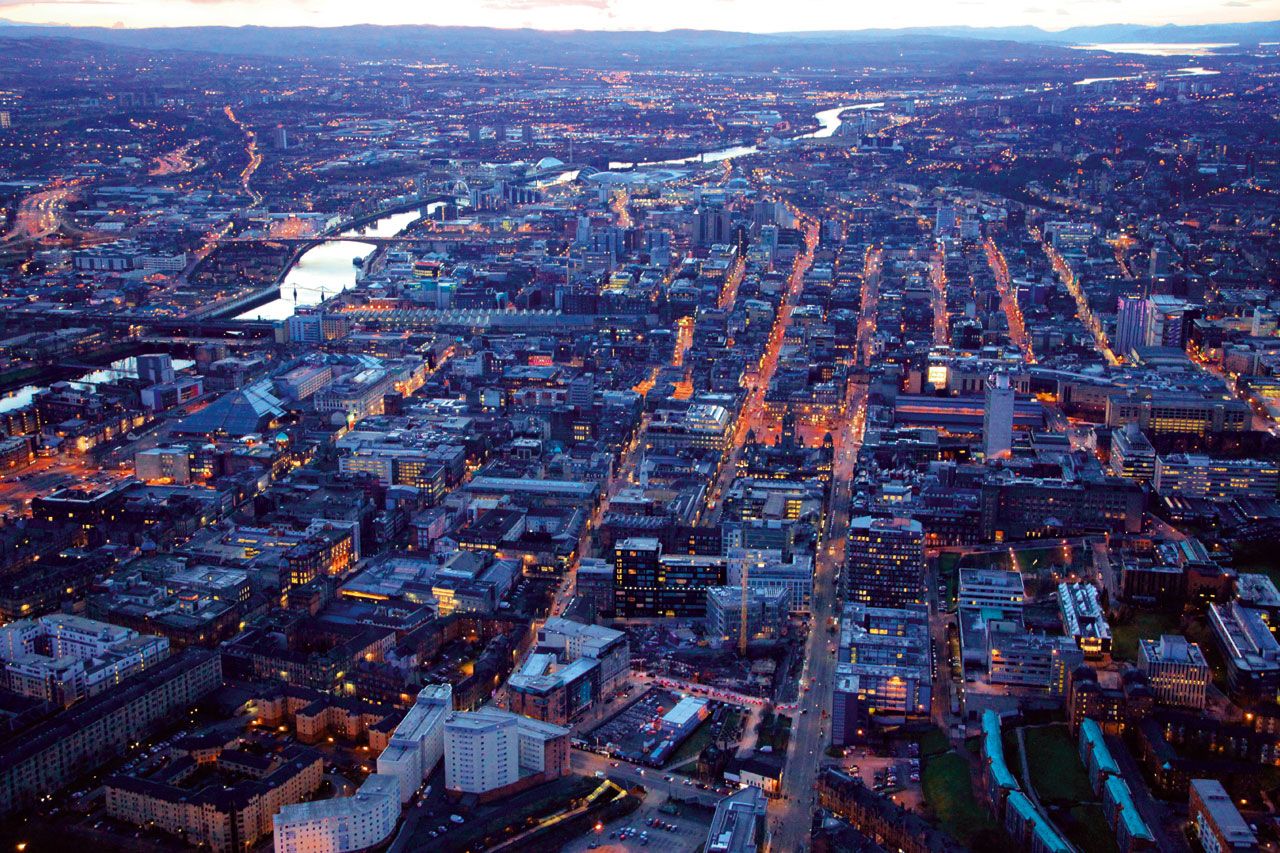
Sometimes a single insight can spark a city-wide transformation. That’s what happened in Glasgow when the Chamber of Commerce, the city and Zero Waste Scotland partnered with Circle Economy to map material flows and uncover circular opportunities.
In 2016, Glasgow’s ambition was clear: to become a circular economy leader. Glasgow Chamber of Commerce and its partners had extensive data on material flows, but the story was buried in complexity. They didn’t know how to translate it into actionable opportunities for businesses. That’s where the Chamber of Commerce engaged with Circle Economy, who stepped in with the Circle Scan, a methodology designed to identify hotspots of circularity at a city-wide level.
The first scan focused on the food and beverage sector and revealed a perfect match: local bakeries were discarding surplus bread, while breweries were still using virgin materials. By connecting these actors under the principles of a circular economy, Glasgow unlocked tangible business loops. For example, Jaw Brew, a local craft brewery, partnered with Auld the Baker to produce Hardtack beer from surplus morning rolls. This innovation replaced 30% of the brewery’s original ingredients, reduced costs, diverted food waste from landfills, and even closed the loop as spent grains were returned to bakeries or local farms.
The pilot was just the beginning. Over the next three years, Circle Economy supported Glasgow Chamber of Commerce in creating a full circular economy strategy to engage with the business community. More than 50 businesses were directly engaged through bespoke circle assessments, as well as via workshops and circular challenges, while tools and frameworks were adapted to the city’s specific business ecosystem.
Glasgow’s circular economy approach did more than transform businesses–it influenced policy. Principles from Zero Waste Scotland were integrated into national policy, culminating in the Circular Economy Route Map for Glasgow (2025-2030), which guides city-wide strategy and cross-city collaborations, inspiring similar initiatives in Edinburgh and Aberdeen.
More recently, leadership development has been boosted through Glasgow’s Circular Economy Leadership Programme, which launched in 2025. The programme consists of a five-day C-suite initiative, including visits to Circle Economy, to explore practical circular solutions.
Glasgow Chamber of Commerce has continued innovating through development of bespoke programmes such as Step Up to Net Zero which has now helped over 100 companies via action plans to support the implementation of circular business models. The pilot programme achieved a 2.5:1 return on investment.
An active Circular Glasgow Network also boasts over 300 members, with regular monthly events to bring businesses together to inspire and encourage circular adoption and collaboration.
“Circle Economy was instrumental as a key partner as Glasgow Chamber of Commerce took its first steps in the circular economy,” says Alison McRae, Senior Director of Glasgow Chamber of Commerce. “That support and ongoing engagement have helped scale circular innovation across our city, with businesses unlocking new value, savings and resilience—future proofing their business. This shows that the circular economy isn’t an ideology, it’s a competitive advantage when implemented at scale.”
A standout example of Glasgow’s circular innovation is the partnership between Auld the Baker and Jaw Brew. After six months of research and trials, Jaw Brew developed a blond beer using surplus morning rolls from Auld the Baker. The result: Hardtack beer, a bronze medal winner in the Scotland Region SIBA awards, made with 30% fewer virgin ingredients.
Jaw Brew also closes the loop with its own waste streams: spent grains are turned into high-fibre bakery products or cattle feed, hops are used as mulch, and brewing heat is recycled. Packaging is being reimagined, too, with biodegradable alternatives to plastic can connectors. This example demonstrates the tangible impact of Glasgow’s circular economy—where collaboration, innovation, and sustainability generate both environmental and economic benefits.
Glasgow is now recognised internationally by the Ellen MacArthur Foundation, the European Investment Bank, and C40 Cities. Its model shows how science-backed insights, combined with stakeholder engagement, can move a city from data to action. Circular initiatives are now embedded in Glasgow’s economy, policy, and leadership, creating resilient businesses and a city prepared for the future.


