.svg)

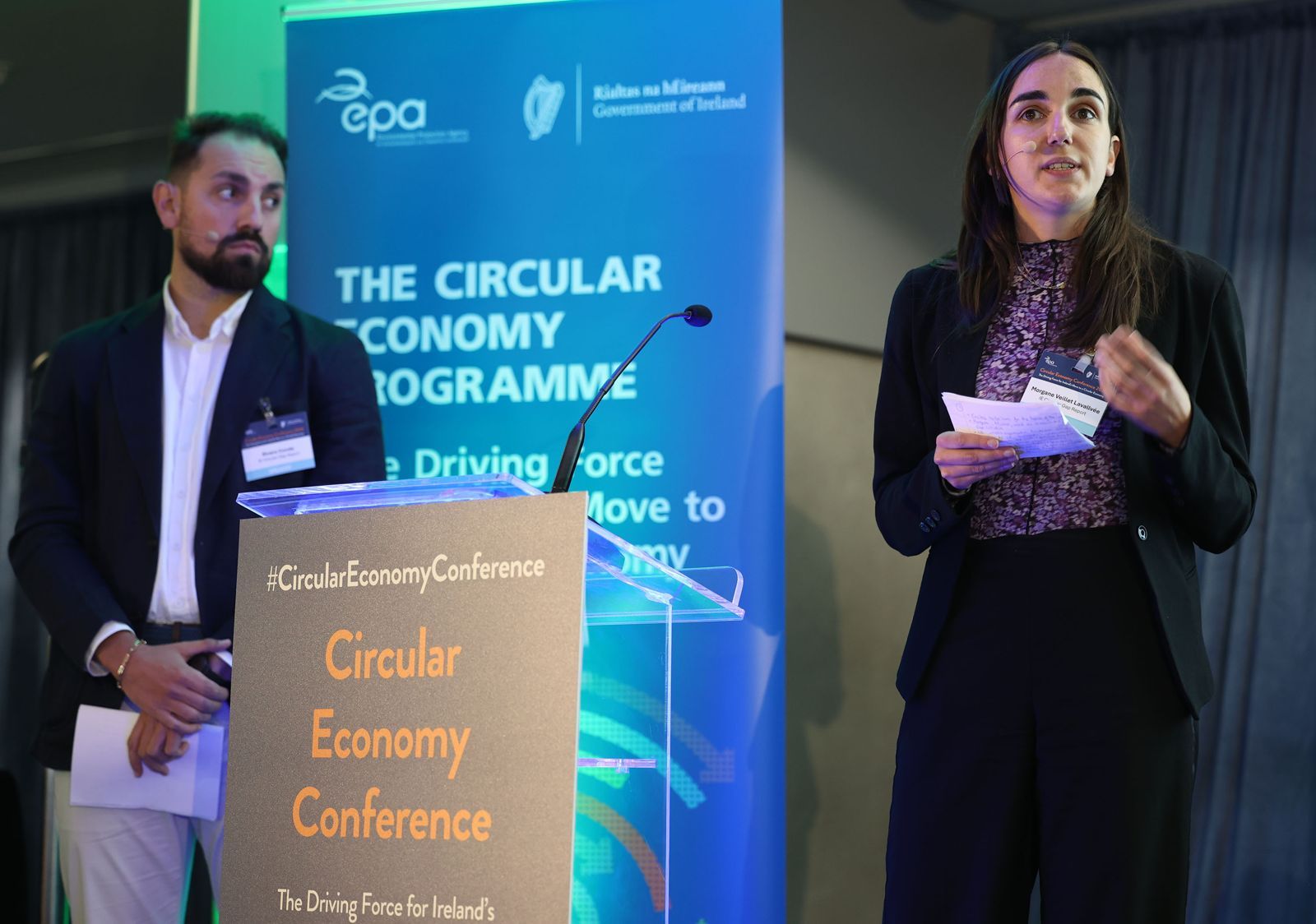
Legislative processes, public consultations and closed-door meetings may not sound particularly exciting, but they are precisely the kind of ‘lever long enough to move the world’. Ireland’s approach to circular policymaking deserves a closer look as a case study in whole-of-government commitment.
Ask around Circle Economy’s office in Amsterdam, and our collaboration with Ireland’s Department of Climate, Energy and the Environment is often cited as one of the most impactful. For the first time, our team worked directly with a national government, helping shape the second Whole-of-Government Circular Economy Strategy. This strategy has the potential to transform every economic sector, from construction to agriculture, and set Ireland firmly on the path to circularity.
At the same time, the work on the Circularity Gap Report Ireland was painstakingly detailed. Along the way, we learned more than we ever expected—from the use of timber frames in Irish houses to the country’s annual yields of barley and wheat. And if we ever showed a hint of reluctance at diving into yet another spreadsheet of agricultural data, it went completely unnoticed.
‘Circle Economy’s role was enlightening and impactful’, says Darren Byrne, Technical and Scientific Advisor at the Department of the Environment, Climate and Communications at the time of our collaboration. ‘We realised we worked with people who were not just doing their job but who were truly passionate about the transition to the circular economy’.
In 2023, the Irish government set out to develop their second Whole-of-Government Circular Economy Strategy. Whereas the first strategy set the scene for future action, raised awareness, and convened key stakeholders, the second edition aimed to develop national legislation and in-depth sectoral action plans. At this point, the Department of Climate, Energy and the Environment needed to establish a baseline to define clear actions and targets for each key sector. To do so, it was important to commission independent research.
Like in any country, many issues in Ireland are highly nuanced. For example, lowering the environmental footprint of construction must be reconciled with the need to address the housing shortage, which demands building a large number of affordable houses—and fast. Independent research enabled the department to consult with external experts based in Amsterdam, who were free from political biases and guided solely by data.
‘Getting external validation empowered us to tackle sensitive issues such as the housing shortage and engage relevant stakeholders’, says Aaron Bayle. ‘The Circularity Gap Report is a reference we can always point back to’.
The CGR Ireland argued—and backed its argument with data—that the costs of transitioning to the circular economy will be offset by long-term economic benefits. This was instrumental in getting other departments on board and ensuring the strategy is embraced at all levels of government.
The CGR also strengthened cross-government coordination. Its findings informed discussions between departments, and its public release provided an opportunity to secure endorsements from key stakeholders driving the country’s circular transition. ‘When the CGR was published, it was cited by other agencies, NGOs, and actors through their policies, strategies, and roadmaps. Plenty of publications in Ireland have referenced the report subsequently, which demonstrates its impact and reach’, says Darren Byrne, Technical/Scientific Advisor at the Department of the Environment, Climate and Communications.
The second Whole-of-Government Circular Economy Strategy is now nearing the finish line. The draft document was submitted for public consultation in September 2025 and received more than 120 responses. It’s now up for the government to integrate public feedback and finalise the strategy, setting a new milestone in Ireland’s circular economy transition.

-p-500.jpeg)


